How IRON NEST Expanded a Niche HighFleet Already Proved
HighFleet proved the demand and named the problems. A two-person studio kept its fantasy, fixed the barriers, and outsold it in week one.
By Ahmet Uysal
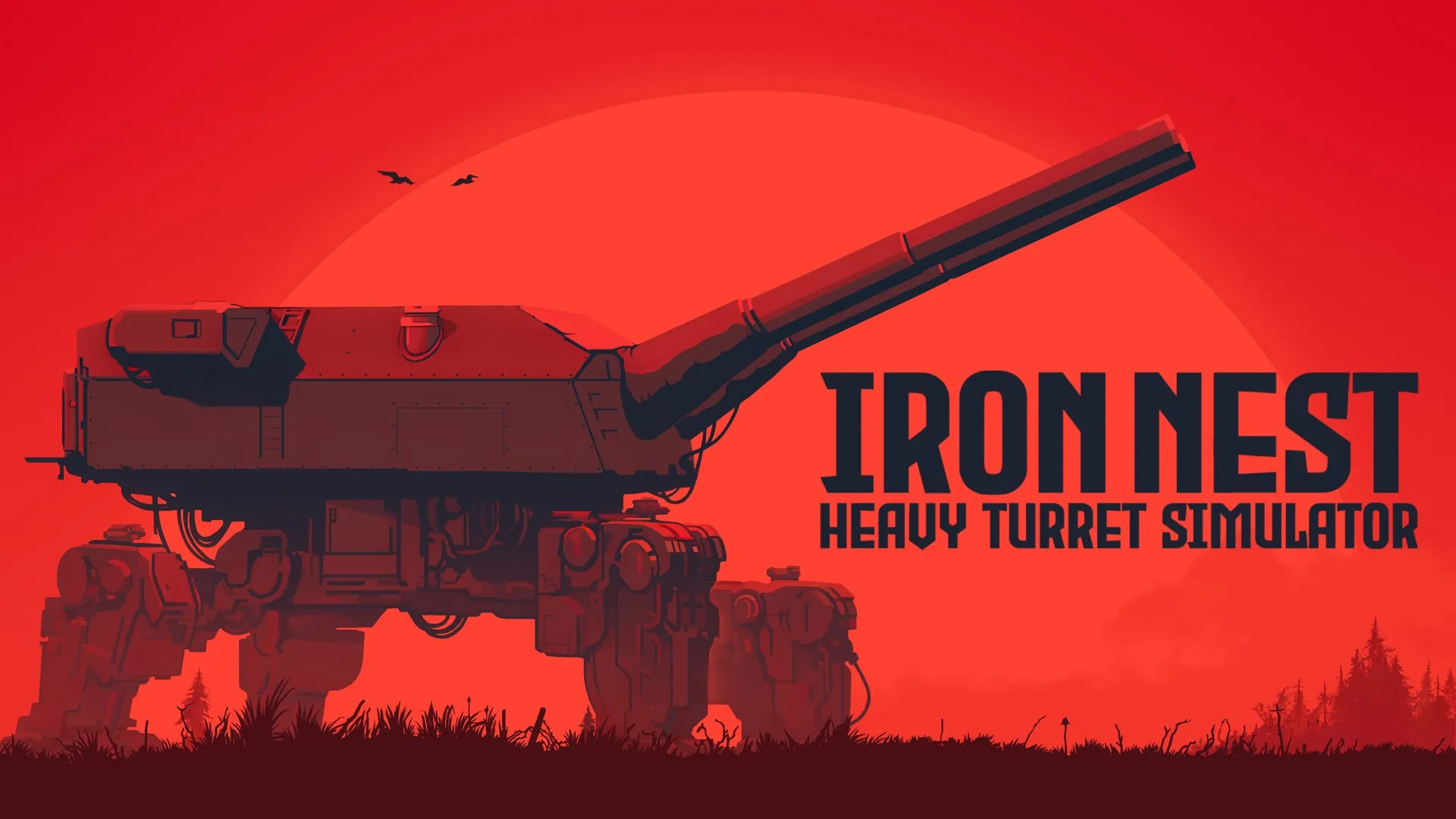
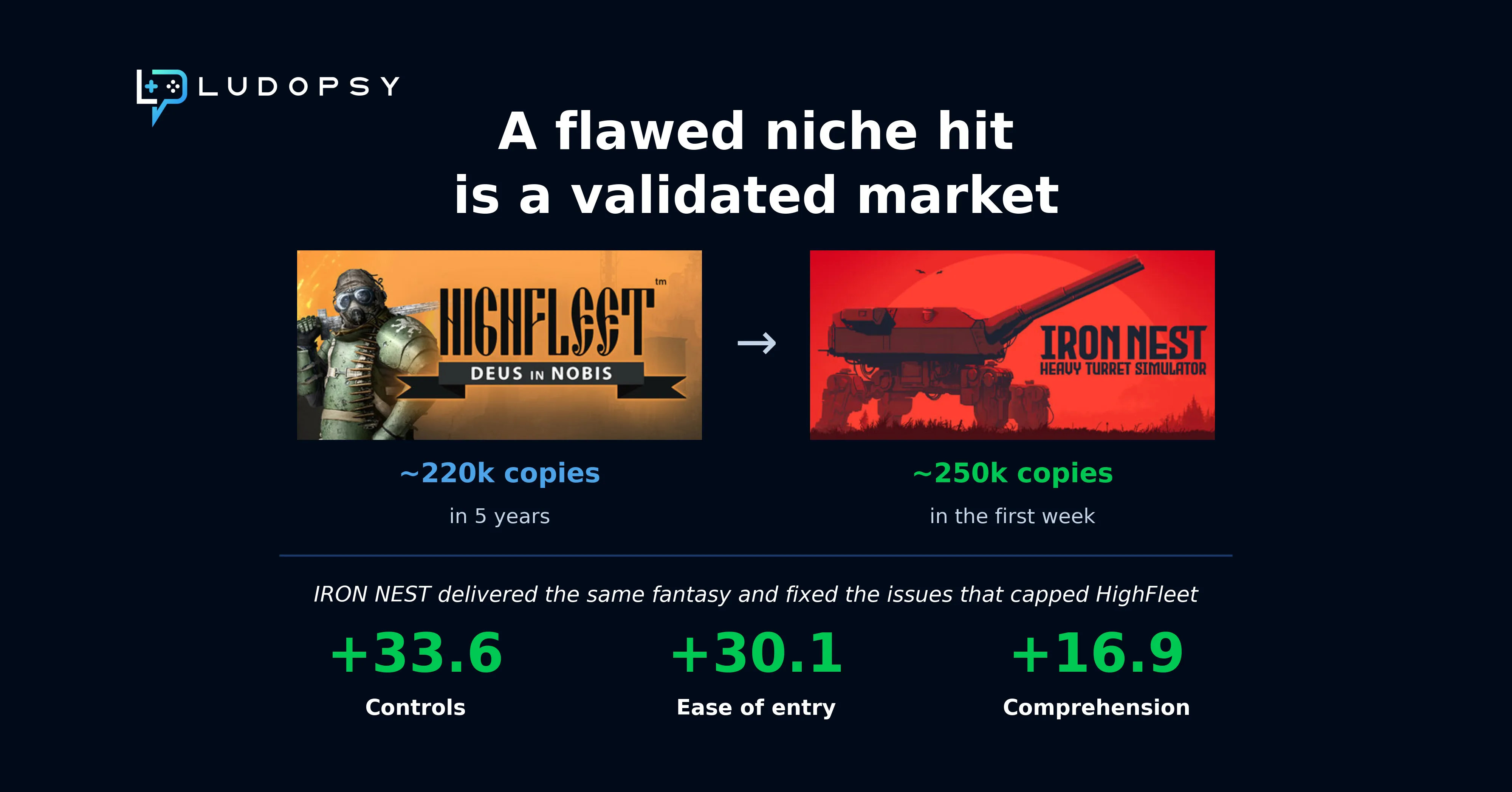
HighFleet (2021) sold ~220K copies, a niche dieselpunk machine-operator sim with brutal onboarding and game-breaking bugs.
Five years later, a two-person studio released IRON NEST: Heavy Turret Simulator and surpassed HighFleet in its first week.
Here’s what our Ludopsy player-review analysis revealed.
The demand signal in HighFleet’s reviews was very clear
Players loved the atmosphere of a machine operator in a dieselpunk imperial universe. Its thematic appeal (92/100) and immersion (97/100) are near the ceiling, and players loved the atmosphere and visual style of a dieselpunk universe with imperial motifs. It also stood out as a unique game: 8th out of 648 games in our database, top 1%.
But the blockers were equally unequivocal: the barrier to entry was very steep
HighFleet ranks 625th of 648 on ease of entry. 33% of reviewers raised accessibility, and 85% of them were negative. Players also struggled with the controls and with understanding the opaque game mechanics. Game-breaking bugs, including tutorial-stopping ones, made it even less accessible.
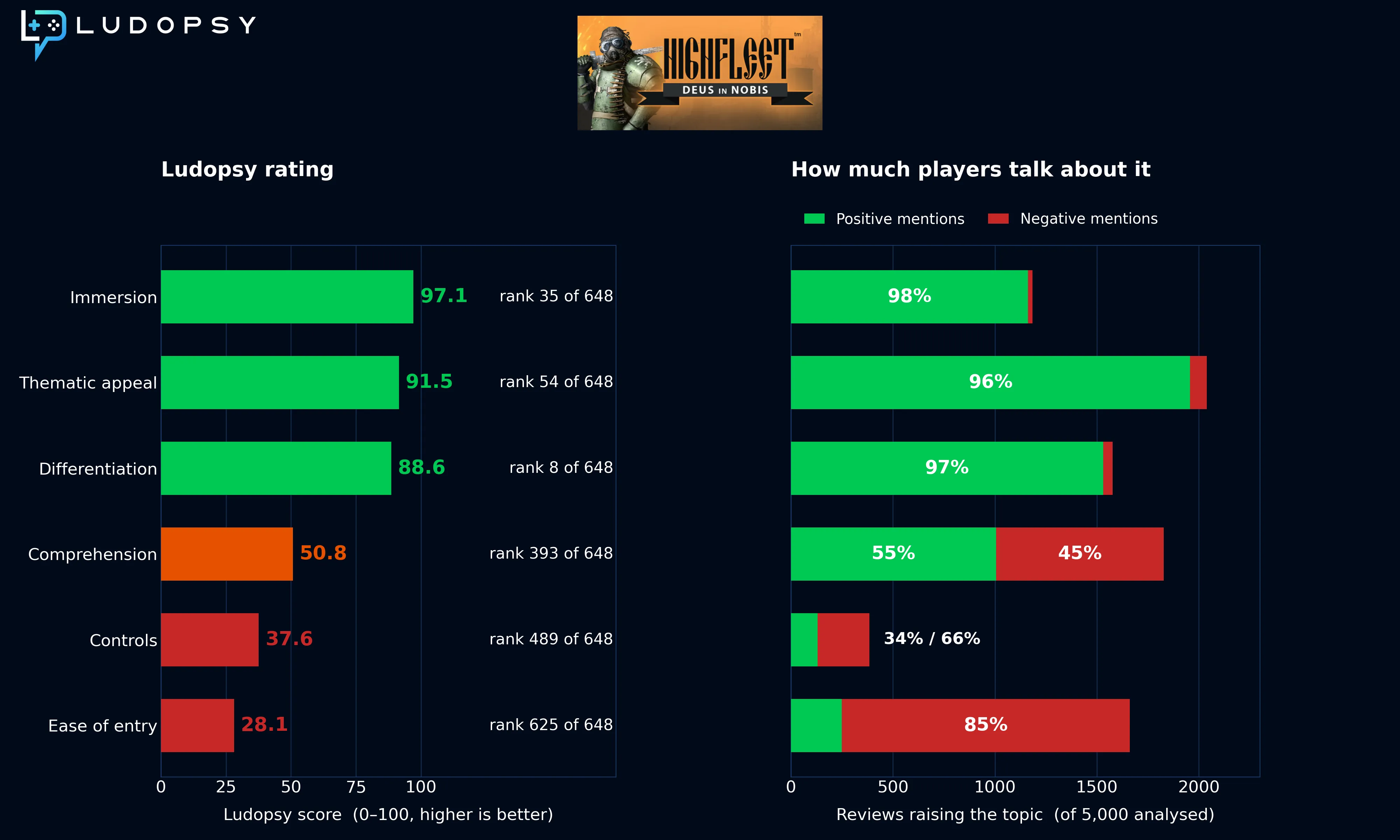
And despite all of this, HighFleet still sold 220K copies. The strong execution of its fantasy, in a unique game, converted the audience. However, it was capped.
IRON NEST preserved the core fantasy while addressing HighFleet’s barrier to entry
IRON NEST preserved the same core fantasy: dieselpunk machine operation, analog instruments, heavy audio, minimal hand-holding, imperial motifs. It executed HighFleet’s biggest strengths at essentially the same level with different gameplay, while removing the wall of entry. Half the launch price, without severe technical issues, also helped.
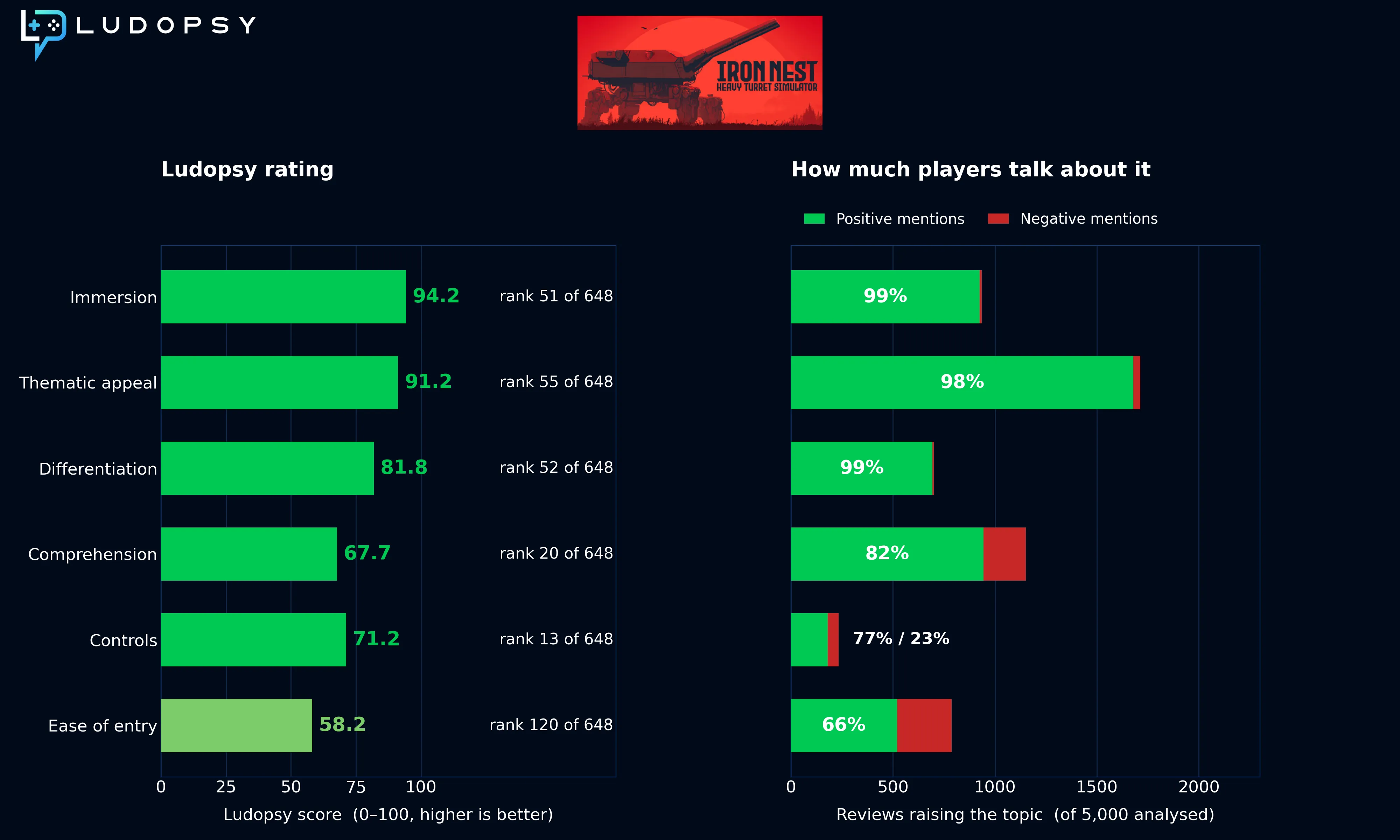
When you put the two games side by side, it’s much easier to see how IRON NEST addressed the gap.
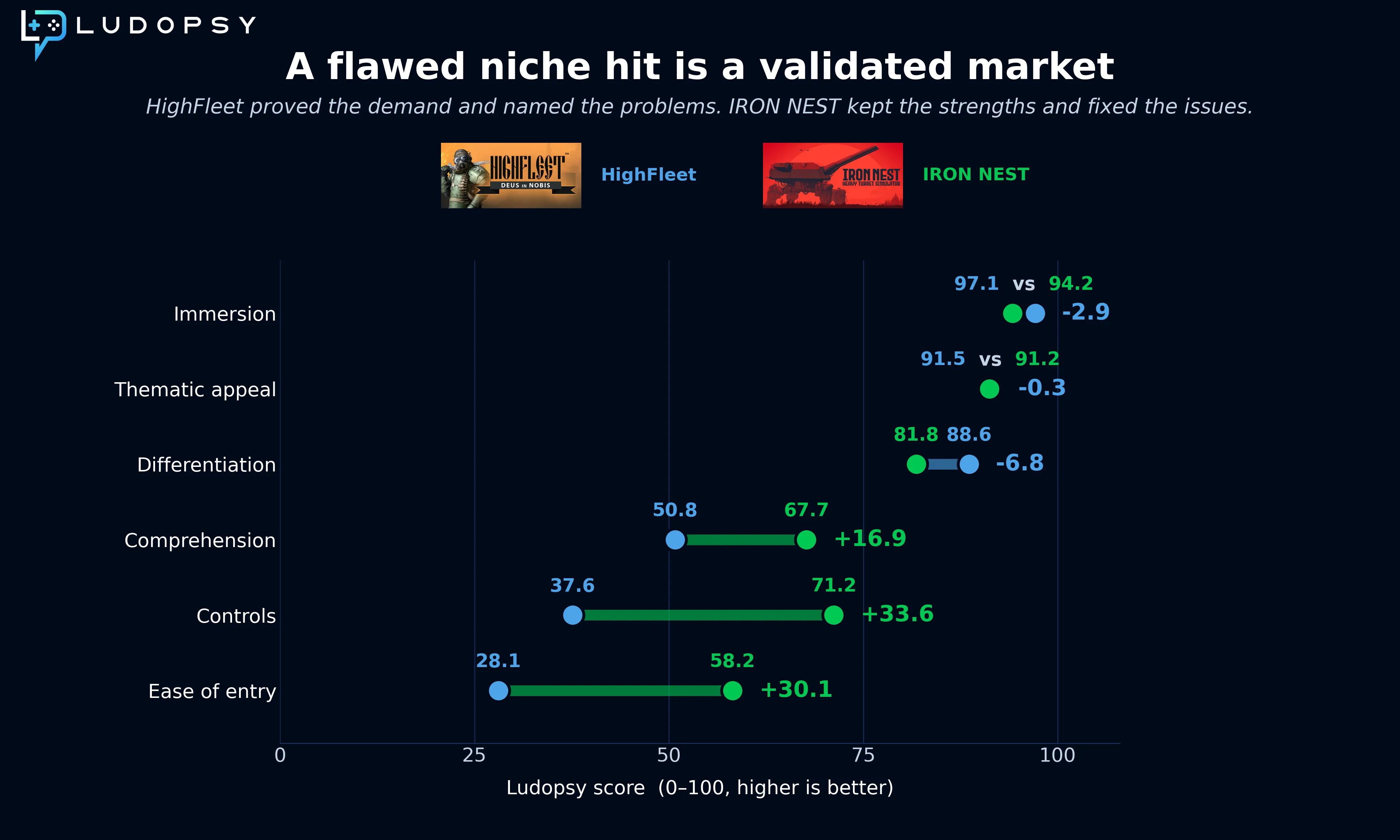
There’s a useful demand signal here for other indie studios too. A flawed gem is a validated market with opportunity: it has already tested what works and what doesn’t. The opportunity is to address the reasons that capped its potential.
PVKK can potentially take this even further
IRON NEST solved HighFleet’s accessibility problem, but it left out some of the depth, exploration and narrative that HighFleet’s audience enjoyed.
So this niche now has two halves of one answer: HighFleet proved the fantasy, IRON NEST proved the approachability.
Which makes PVKK: Planetenverteidigungskanonenkommandant (yes, one word) a very interesting test. If it can combine HighFleet’s depth and narrative with IRON NEST’s approachability while providing the same fantasy, we’ll find out how big this niche actually is.