How Much Does Poor Optimization Cost Your Steam Score?
Across 1.86M Steam reviews, technical issues cut recommendations by about 12 points even when players like the gameplay. Here is where the bar sits.
By Ahmet Uysal
Your game’s optimization and technical performance matter more than most developers realize.
We analyzed 1,855,680 Steam reviews across 367 PC games to see how players’ experience of technical performance relates to whether they recommend the game.
When reviewers praise technical performance, 96% recommend the game. When they criticize it, recommendations drop to 46%, a 50 percentage-point gap.
The real cost is about 12 points
That full 50-point gap is confounded by gameplay quality. It’s a chicken-and-egg problem, since performance issues tend to hurt the gameplay too. But even when players enjoy the gameplay, running into performance issues reduces recommendations by about 12 points.
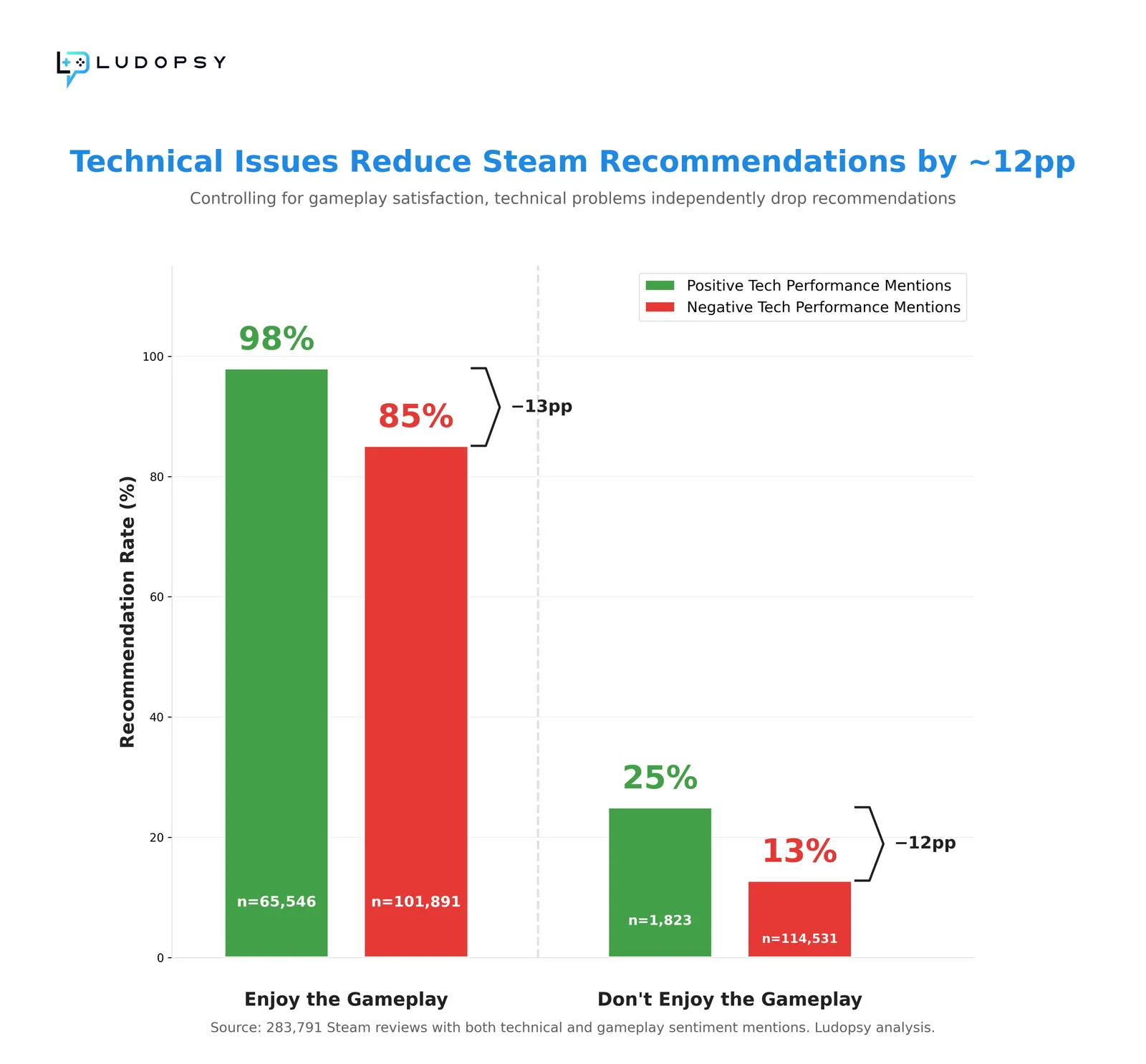
A 12-point drop is not small. It can push your game’s Steam rating down a full level, for example from Very Positive to Mostly Positive, and that materially affects your outcomes.
So where is the bar?
Both severity and prevalence matter. Players tolerate light issues, but serious ones destroy goodwill, and your reviews along with it. When reviewers report moderate issues, the recommendation rate falls to 52%. When they report severe issues, it falls to 11%.
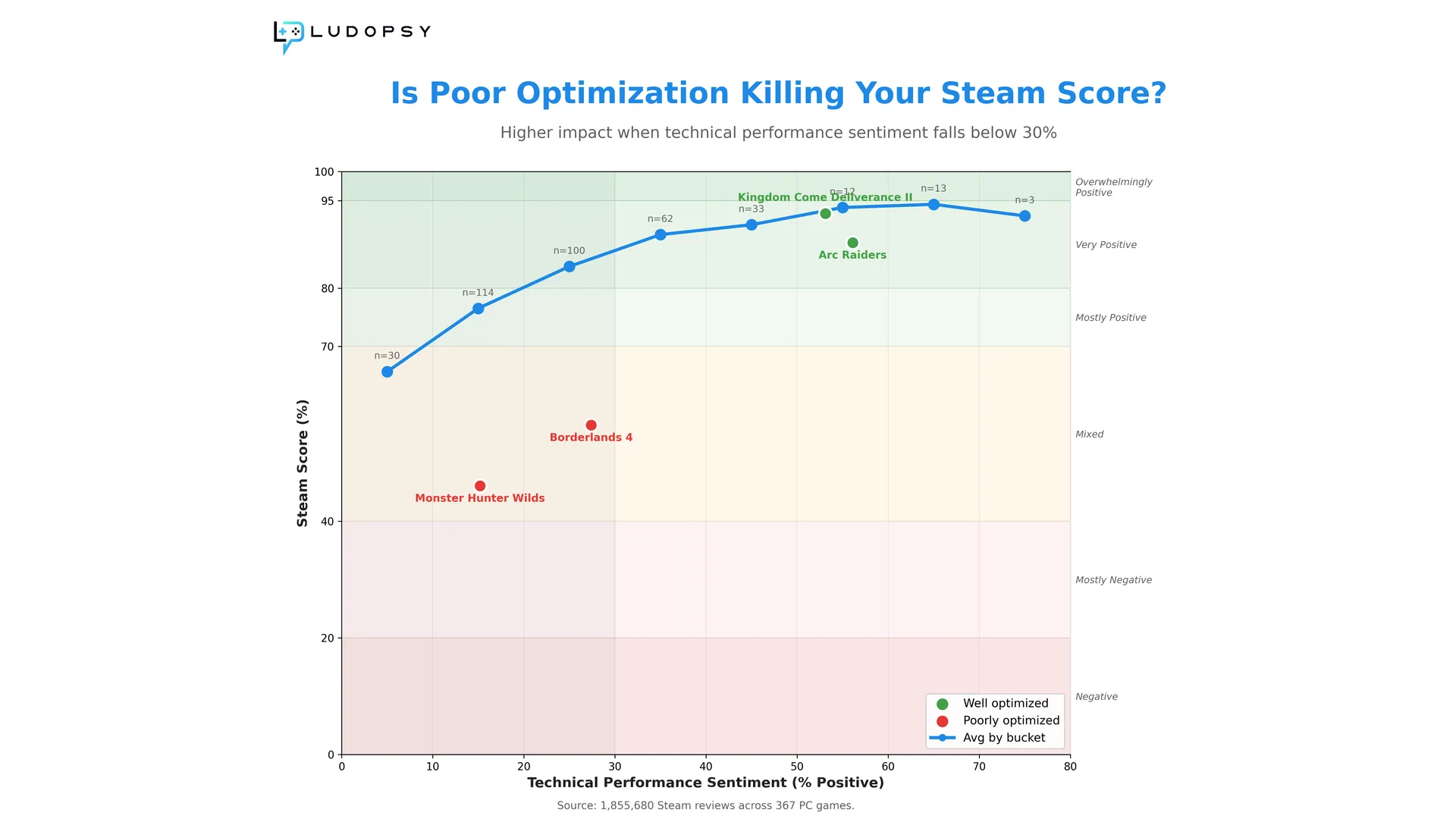
Players complain about technical issues a lot, so the bar is lower than you might expect. Games where at least 30% of technical performance mentions are positive typically keep healthy review scores. Below 30%, pay attention, especially if the complaints are frequent.
Last year’s releases show both sides. Kingdom Come: Deliverance II (53% positive) and Arc Raiders (56% positive) are good examples of technical execution. Monster Hunter Wilds (15% positive) and Borderlands 4 (27% positive) fell below the threshold. In both, players raised technical issues about four times as often as average, and the games’ Steam scores suffered accordingly.
Steam Deck sets a practical benchmark
There is an opportunity, though. Reviews written on Steam Deck are far more positive about technical performance: 48% positive, clearing the 30% bar, against 23% on PC. The difference holds even when we control for the game’s tier.
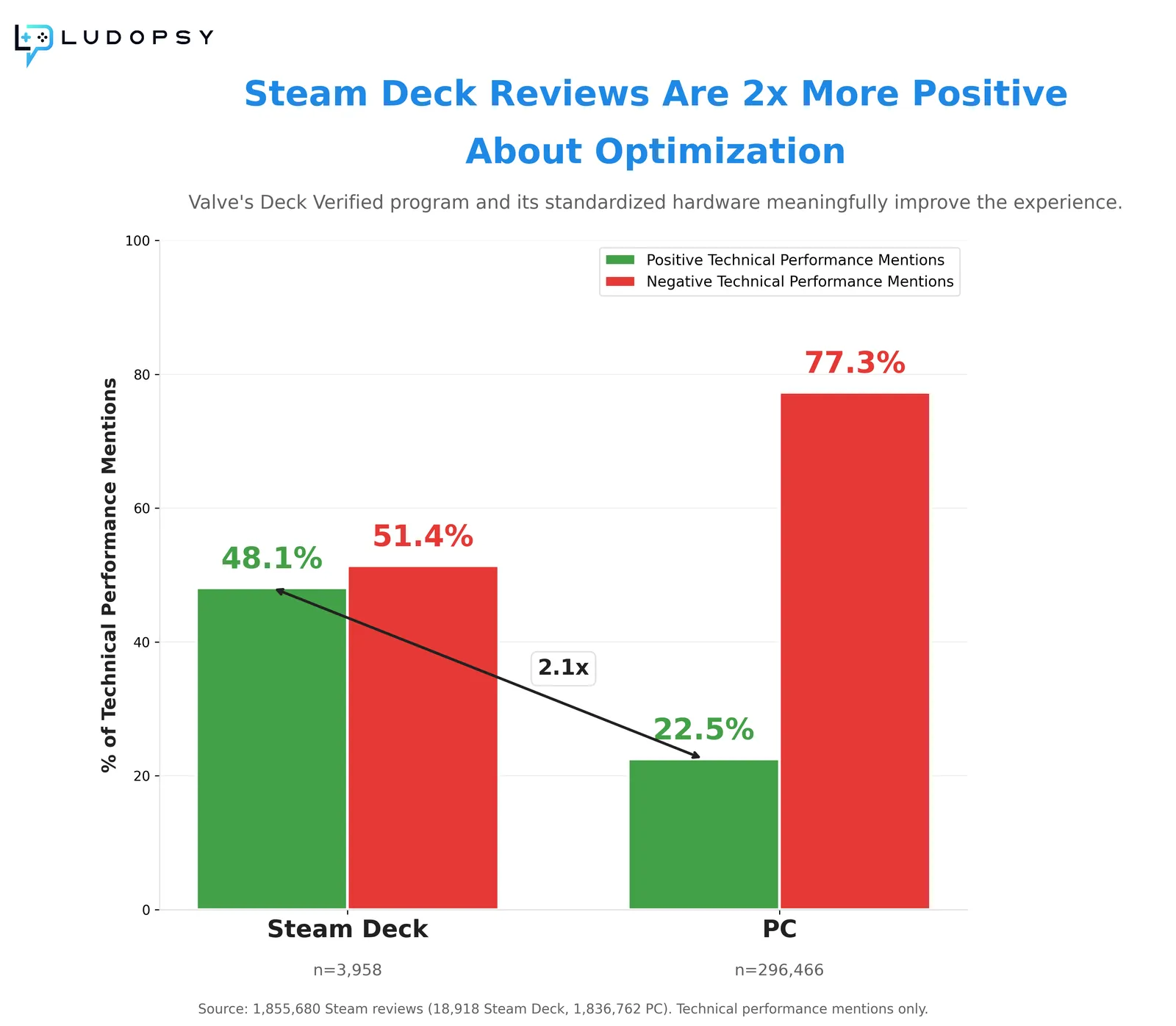
This suggests Valve’s Deck Verified program, together with standardized hardware, genuinely improves the technical experience. It also gives studios a practical benchmark: if your game can clear the Deck Verified bar, you are probably in a safer spot.