Above $35, PC Players Judge Value Differently
Across 282,140 Steam reviews that discuss pricing, sentiment drops sharply above $35, where players get far stricter about content scope and quality.
By Ahmet Uysal
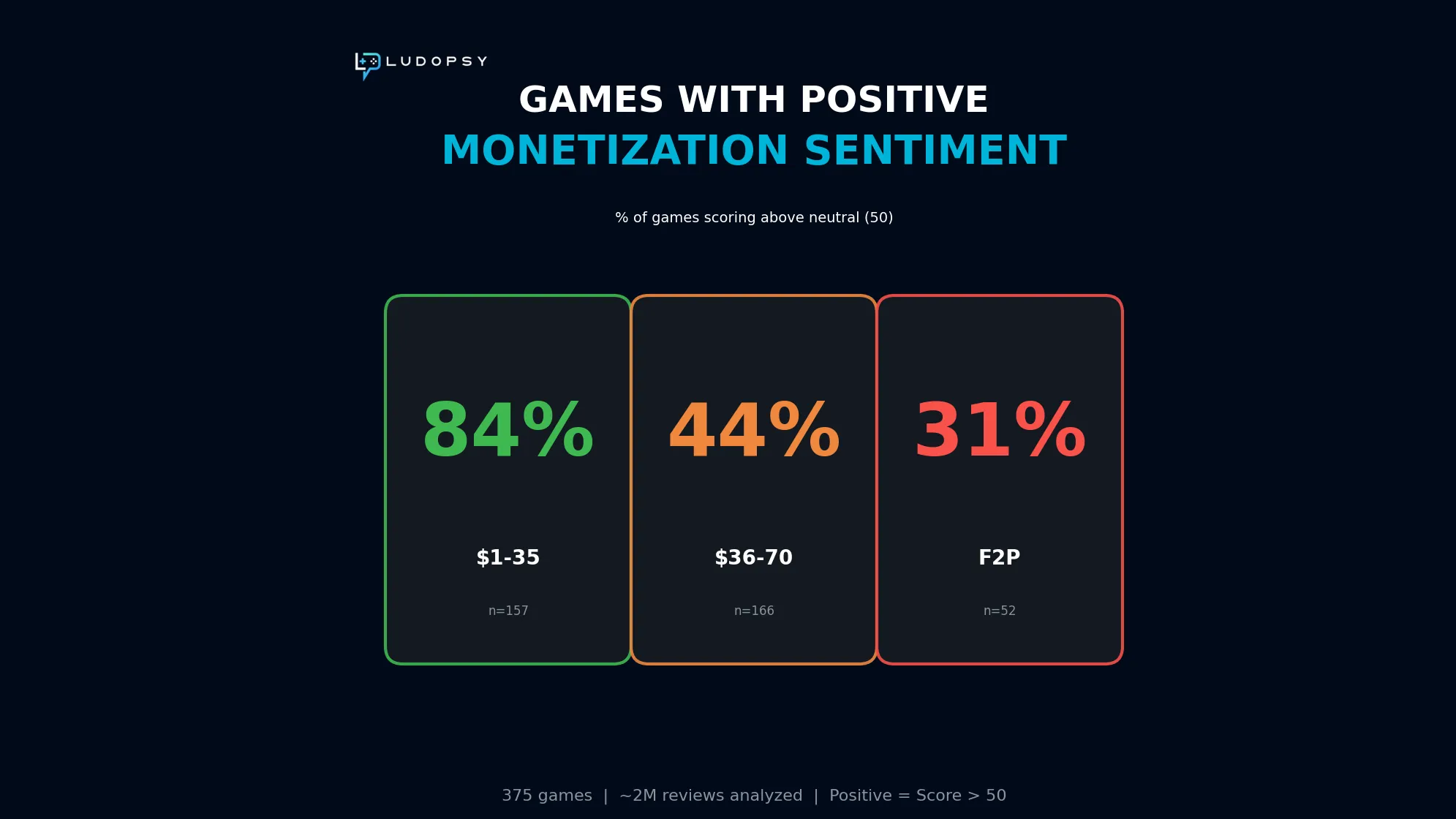
Pricing above $35 appears to fundamentally change how PC players perceive value.
This analysis is based on 2,111,649 Steam reviews, including 282,140 that discuss pricing or monetization. It isn’t a survey, but it reflects direct pricing sentiment from more than 280,000 players, a scale rarely achievable in traditional consumer research.
The pattern holds across price tiers
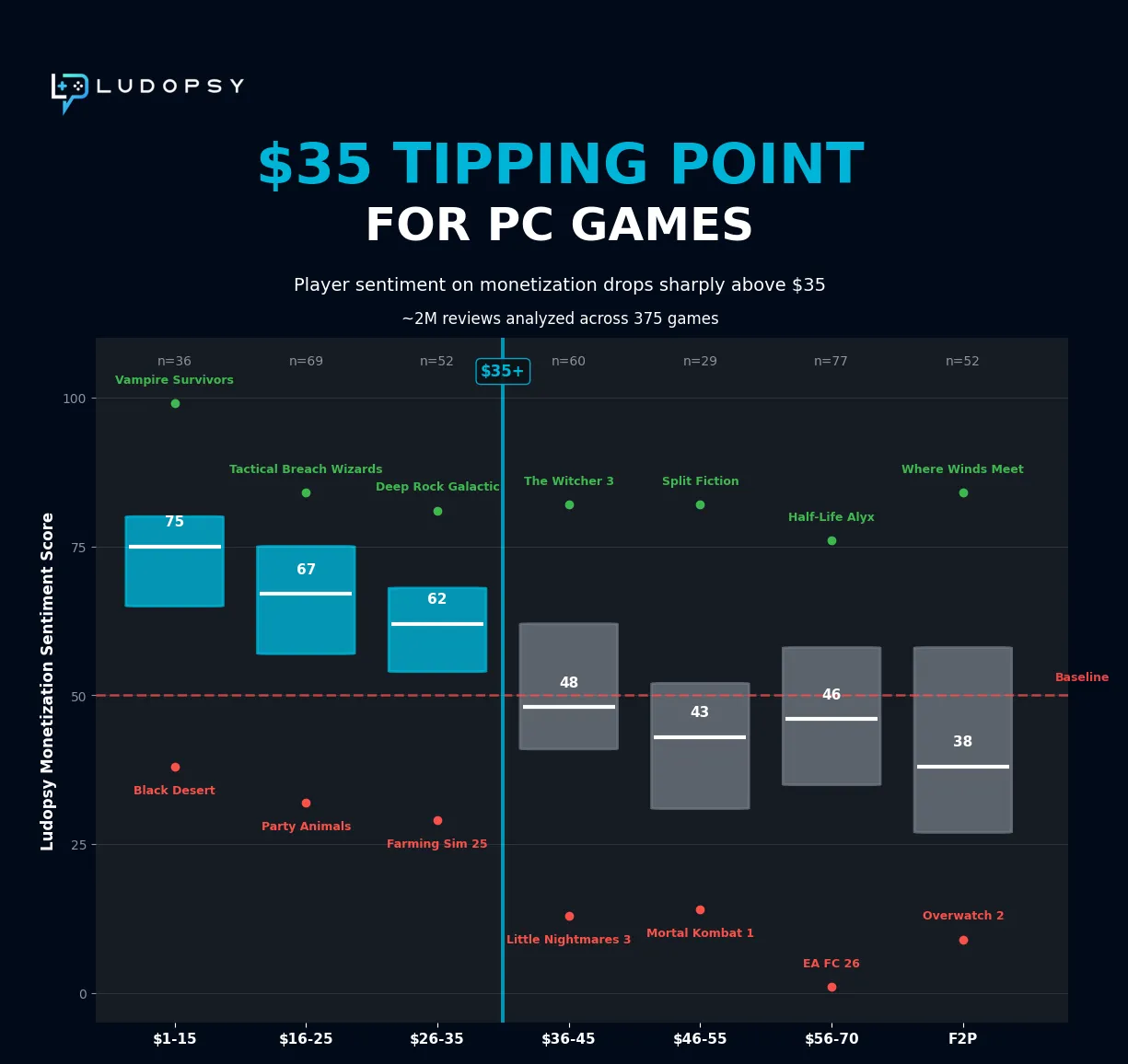
Once prices exceed $35, players become significantly more sensitive to content scope and product quality.
Above $35, scope and quality decide
Little Nightmares 3 struggles in the $36–45 tier, where complaints about short content are compounded by technical issues. Split Fiction, in contrast, performs strongly: players see its content quality and friend-pass system as exceptional value for money.
Half-Life: Alyx targets a high-end VR audience and is widely praised for quality, with many reviewers calling it hardware-justifying and worth every penny at full price (its sentiment is partly influenced by discounts). Even so, 47% of its negative pricing sentiment still centers on limited length and lack of replayability.
Free-to-play starts from behind
Free-to-play titles show the most negative monetization sentiment overall, driven largely by pay-to-win concerns. Yet strong content and quality can still win player trust, as Where Winds Meet shows, despite some criticism of its cosmetic pricing.
The open question
Are the positive outliers leaving money on the table, or growing because of it?